

As seen in


A Common Condition That Can Affect Your Quality of Life
Dry eye disease can significantly decrease comfort, clarity of vision, and overall quality of life. If your eyes often feel dry, gritty, irritated, or tired — particularly after using screens, wearing contact lenses, or spending time in air-conditioned or windy environments — you may be experiencing symptoms of dry eye.
Take the Self-Test
We’ve created a short, research-based self-test to help you understand your risk factors, screen for dry eye disease, and explore how contact lens wear may affect your symptoms.
This self-test provides personalised feedback, including lifestyle tips and when to consider seeing a specialist.
What is Dry Eye Disease?
Dry eye disease happens when your eyes do not produce enough tears, or when the tears evaporate too quickly. The tear film becomes unstable, leading to discomfort, blurred vision, and sometimes long-term changes to the surface of the eye.
Risk Factors
You may be more likely to experience dry eye if you:
- Spend long hours on digital devices
- Wear contact lenses regularly
- Are over the age of 40
- Are female (hormonal changes play a role, especially after menopause)
- Take certain medications (antihistamines, blood pressure tablets, oral contraceptives, etc.)
- Have systemic conditions such as arthritis or thyroid disease
- Spend time in environments with air conditioning, heating, wind, or smoke
Can contact lenses cause dry eye?
Contact lenses offer greater freedom than glasses, but not everyone tolerates them well. Some people experience eye irritation, redness, or gritty discomfort, especially after long wear or in dry environments. These symptoms are often mistaken for ‘dry eye disease,’ but they may actually be signs of contact lens intolerance. Contact lenses can disrupt the tear film, reduce oxygen delivery, and lead to discomfort over time. Laser vision correction like LASIK or PRK may offer a long-term alternative, particularly for those who struggle with lens comfort or repeated infections — provided your eyes are healthy and suitable for surgery.
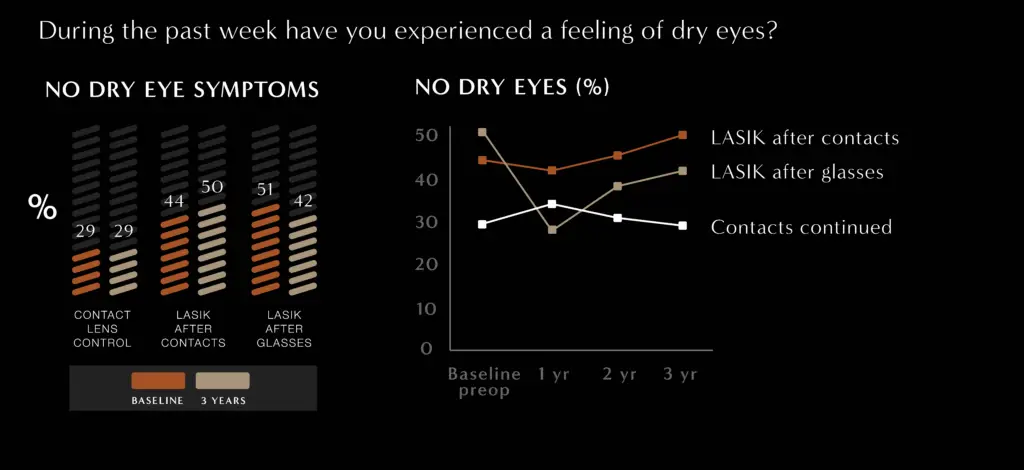
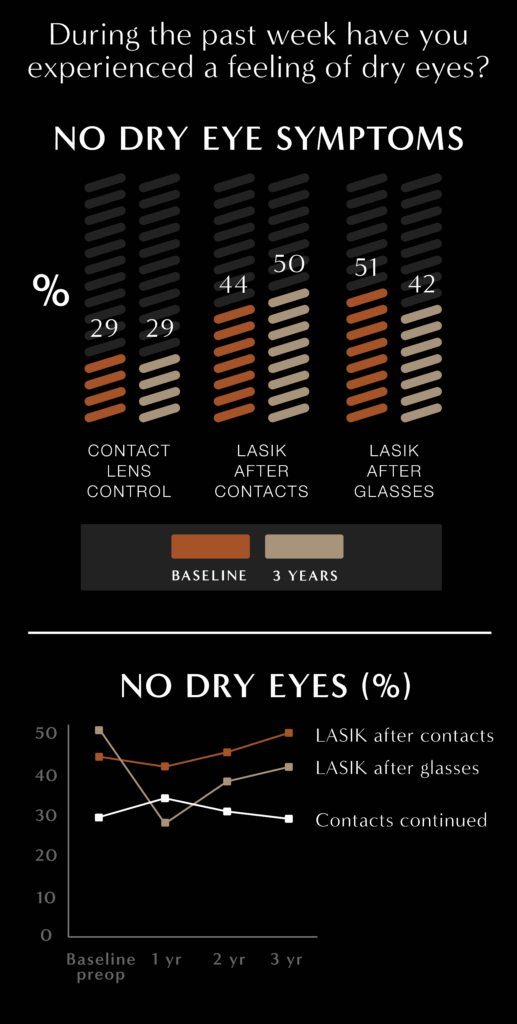
Graphs adapted from the Symptoms and Satisfaction of Patients in the Patient-Reported Outcomes With Laser In Situ Keratomileusis (PROWL) Studies.
The FDA’s PROWL (Patient-Reported Outcomes with LASIK) studies found that LASIK led to higher levels of satisfaction, reduced night driving issues, and lower rates of eye infections and complications compared to continued contact lens wear. While the studies noted a slight increase in dry eye symptoms for some glasses-wearers post-LASIK, this was balanced by a decrease in dry eye symptoms and improved night vision for contact lens users who transitioned to LASIK.
Treatment Options
Treatment depends on the cause and severity of your dry eye symptoms. Options may include:
- Lifestyle adjustments: regular blinking, hydration, reducing screen time, using a humidifier
- Lubricating eye drops: preservative-free artificial tears to relieve dryness
- Eyelid care: warm compresses and gentle lid cleaning to improve tear quality
- Specialist therapies: prescription drops, punctal plugs, or in-office procedures. There are also laser treatments that may reduce dry eye symptoms.
- Alternative vision correction: for those who struggle with contact lens intolerance, options like LASIK or implantable contact lenses (ICLs) may be considered if suitable
DRY EYE DISEASE FAQs
Everything you need to know about dry eye disease and all related aspects.
Is dry eye a permanent condition?
Dry eye can be chronic, but many treatments help manage symptoms and improve comfort. Following the lifestyle adjustment in our self-test may in some cases significantly improve dry eye symptoms.
When should I see a specialist?
If your symptoms are severe, persistent, or affecting your daily life, an assessment by an optometrist or ophthalmologist is strongly recommended. Our self-test contains a screening questionnaire used by may healthcare practitioners to screen for dry eye disease.
Are glasses better that contact lenses for those experiencing dry eye symptoms?
Yes — glasses do not interfere with the tear film and carry no infection risk. Contact lenses are safe for many, but hygiene and lens type are critical.
What are the main reasons for failing contact lenses?
Dry eye symptoms and night vision disturbances are the two main reasons for discontinuing contact lens wear. When you start using contacts at a younger are these symptoms may not bother you but often get worse as you age.