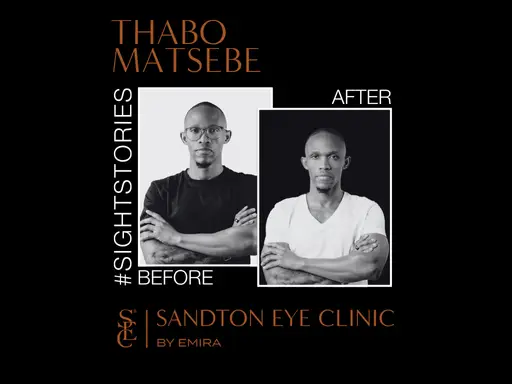
Challenges Related to Vision Before the Procedure:
Driving at night was a daunting task and persistent headaches forced me to rely on glasses. Seeing objects from afar was a constant struggle, even simple tasks like walking became cumbersome without the aid of glasses.
First Impressions With Improved Vision:
Suddenly, distant billboards became legible, a sight I had long forgotten. Nighttime surroundings revealed intricate details previously obscured by darkness, enhancing clarity in low-light environments. Road signs and markings became vivid, contributing to a safer driving experience. As my vision improved, the frequency and intensity of headaches diminished. Whether watching movies or reading text from a distance, digital screens became effortlessly readable.
With clearer vision, my daily activities and hobbies underwent a significant transformation. Teaching and demonstrating exercises became seamless, as I no longer feared glasses breaking. I could now confidently present and interact with audiences across the room without being tethered to a stationary position. Engaging in physical activities, like Spartans or warrior races, became a source of joy rather than anxiety, knowing that my improved vision reduced the risk of injury. Long-distance travel became enjoyable without the discomfort of eye irritations caused by prolonged wear of glasses.
To anyone considering vision correction surgery, I would offer the following advice:
The procedure is straightforward, quick and minimally invasive. For me, it was a lifetime solution towards my visually impaired struggles, freeing myself from the constraints of glasses or contacts. Embrace newfound confidence and self-esteem with clearer vision.
As an Exercise Experience Manager, the impact of improved vision on my professional and personal life has been profound. Gone are the days of anxiety-ridden activities and hindered mobility. The beauty of noticing small things and how beautiful they are. Such as noticing how amazing my eye colour is, and the shape of things without them being zoomed in. I started to appreciate colours and in a way, life is suddenly made easy, beautiful and peaceful. I even have forgotten that I’ve worn glasses because each day I notice something with my naked sight. Vision correction surgery has not only enhanced my sight but has also illuminated my appreciation for the world around me.
Learn more about vision correction options for your age group:
Disclaimer: This story is based on a personal experience shared by one of our patients, who provided consent for it to be used. The content has been edited for clarity and to comply with medical advertising guidelines. Each patient’s experience is unique. Glasses remain a safe option as they do not involve any medical procedure. PRK is a lifestyle choice for those seeking unaided vision and may not be suitable if you are content with wearing glasses. Research suggests the cumulative risk of contact lenses may exceed that of LASIK.
#LaserVisionCorrection #PRK #SandtonEyeClinic #Collaboration #Sponsored
Share this Vision Correction Story Online
Recent Sight Stories

Advancing Vision Correction in South Africa: First Artiplus Lens Procedure Performed by Dr Lourens Coetzee
Precision in sight – Dr Lourens Coetzee holds up an enlarged model of the Artiplus Phakic Implantable Lens, representing a breakthrough in the correction of presbyopia. South Africa has entered

Clear Vision, Her Way: Why More Women Are Choosing LASIK
In honour of Women’s Day, we explore how clear vision empowers women to live confidently, freely, and on their own terms, and why women are considering vision correction like LASIK.

LASIK: A Shift in Perspective on Clear Vision
| Written by Dr Yolandie Coetzee July marks Global Vision Correction Month—a time to reflect on how far we’ve come in restoring sight and improving lives. Whether through glasses, contact

What’s Causing Your Blurry Vision? A Guide to Refractive Errors
If you’ve ever struggled to see clearly—whether at a distance, up close, or both—it may be due to a refractive error. The most common types include nearsightedness (myopia), farsightedness (hyperopia), astigmatism, and presbyopia. These conditions